Driven by global carbon-reduction goals and the growing adoption of renewable energy, energy storage is expanding from large, centralized power stations to distributed applications such as residential, portable, and emergency backup power. According
to Frost & Sullivan, the global residential energy storage system market grew at a compound annual growth rate of 58.3% from 2021 to 2025, increasing from RMB 10.8 billion to RMB 67.6 billion. The market is expected to reach RMB 290 billion by 2031.
The 1kW power segment bridges portable and light residential energy storage. It supports portability, parallel operation, and grid connection, making it a fast-growing market segment.
For outdoor energy storage, home backup, emergency power, and similar applications, Geehy has introduced the G32R502 1kW fully digital bidirectional energy storage inverter solution. Its fully digital control and two-stage totem-pole PFC + LLC architecture provide a cost-effective, reliable, and highly integrated reference design for low-power bidirectional energy storage inverters.
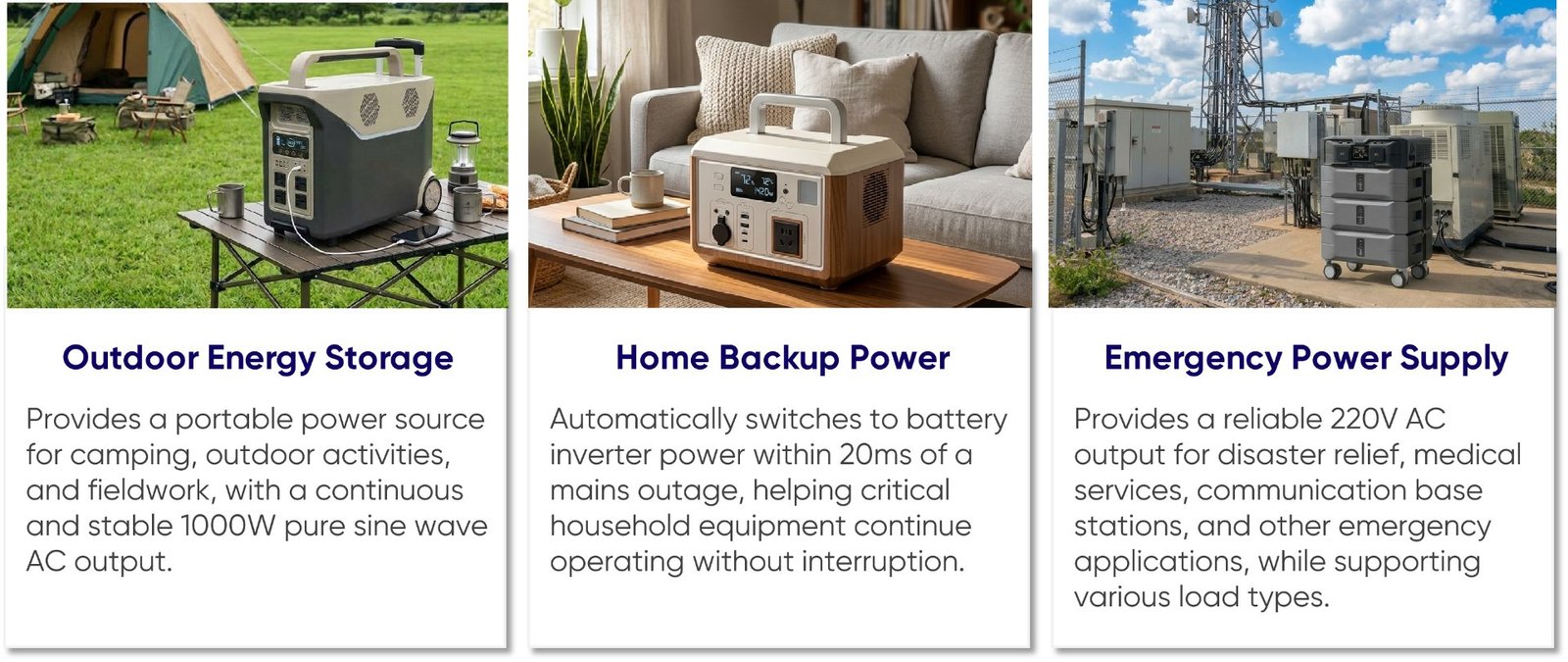
Applications of the G32R502 1kW Energy Storage Inverter Solution
Introduction to the G32R502 1kW Energy Storage Inverter Solution
The solution uses a two-stage totem-pole PFC + LLC power architecture:
The front-end totem-pole PFC stage supports both rectification and off-grid inverter operation. The G32R502’s built-in high-speed comparator enables cycle-by-cycle (CBC) inductor current control, allowing the system to handle output short circuits and sudden capacitive load connection.
The back-end isolated DC/DC stage uses a resonant LLC half-bridge converter controlled independently by a second G32R502. A hardware resonant channel enables soft switching across the full operating range, while a fixed-resonant-frequency no-load control strategy maintains high LLC efficiency under all operating conditions.
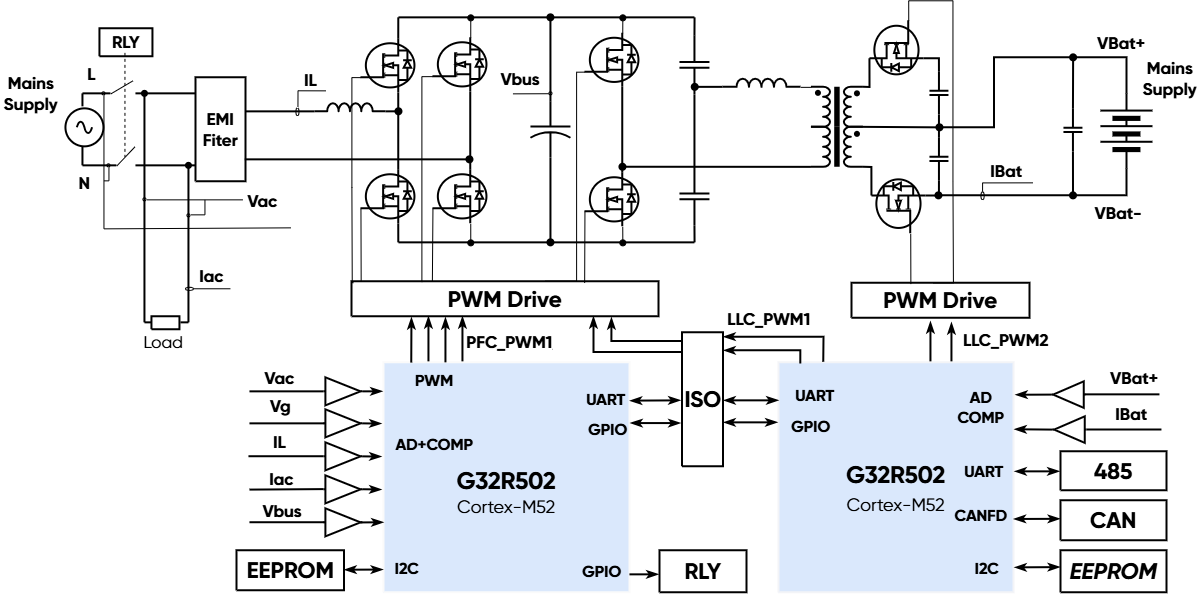
G32R502 1kW Energy Storage Inverter Solution Block Diagram
Solution Specifications
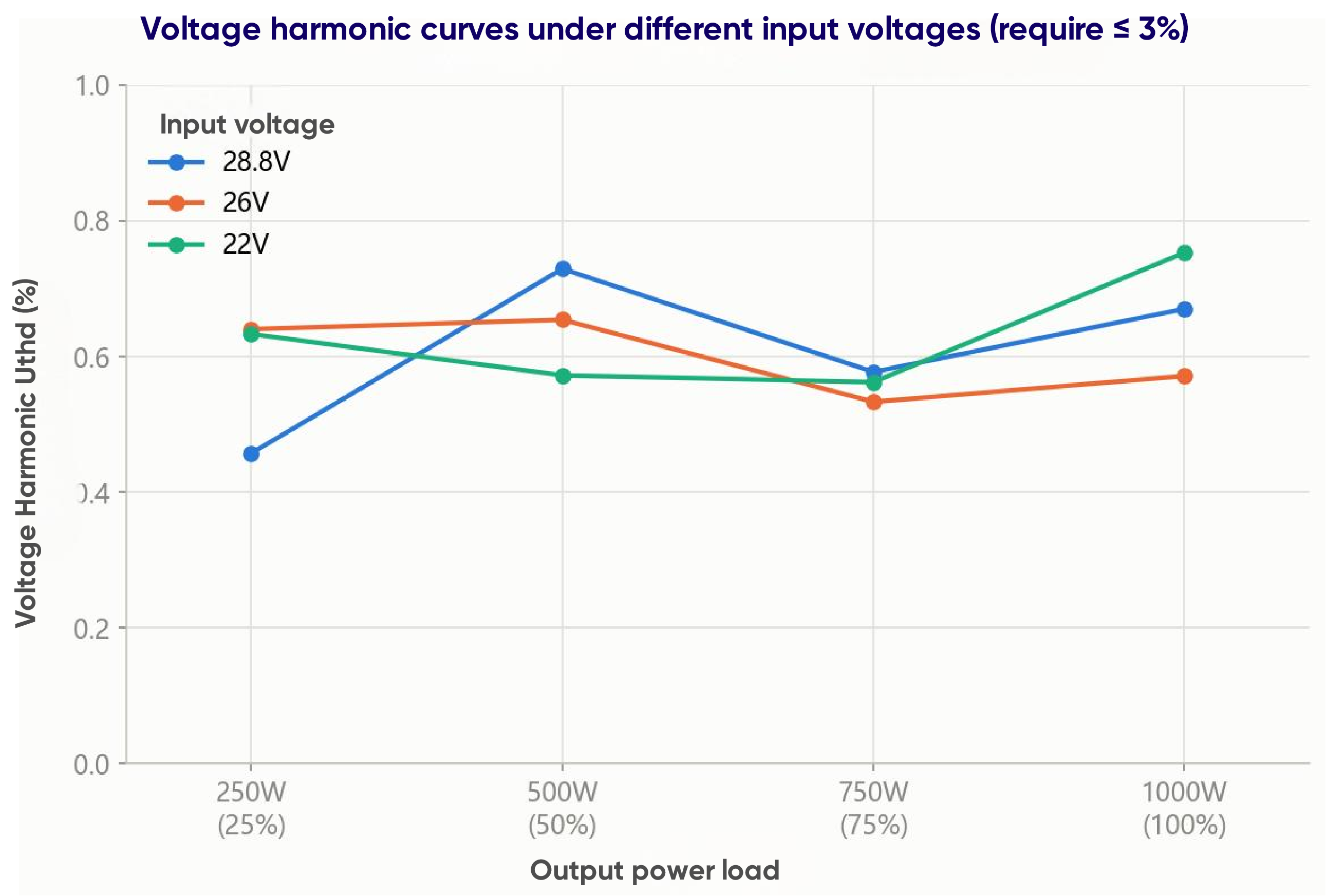
It supports 220V AC input and output, with the output frequency automatically following the AC charging input frequency. Its DC bus can be adjusted from 320V to 450V, while the 22V–28.8V battery input range supports 25.6V eight-cell LiFePO4 battery packs. The solution delivers 1000W rated output power, AC output voltage THD below 1%, and AC charging power of up to 1000W.
Basic Specifications
Product Model
Product Specification
Supported Battery
8-cell LiFePO4 battery pack (25.6V)
Output AC Voltage
230V AC (configurable)
Input DC Voltage
Stable operation from 22V to 28.8V
Rated Output Power
Output Waveform Distortion ≤3% (inverter output, resistive load)
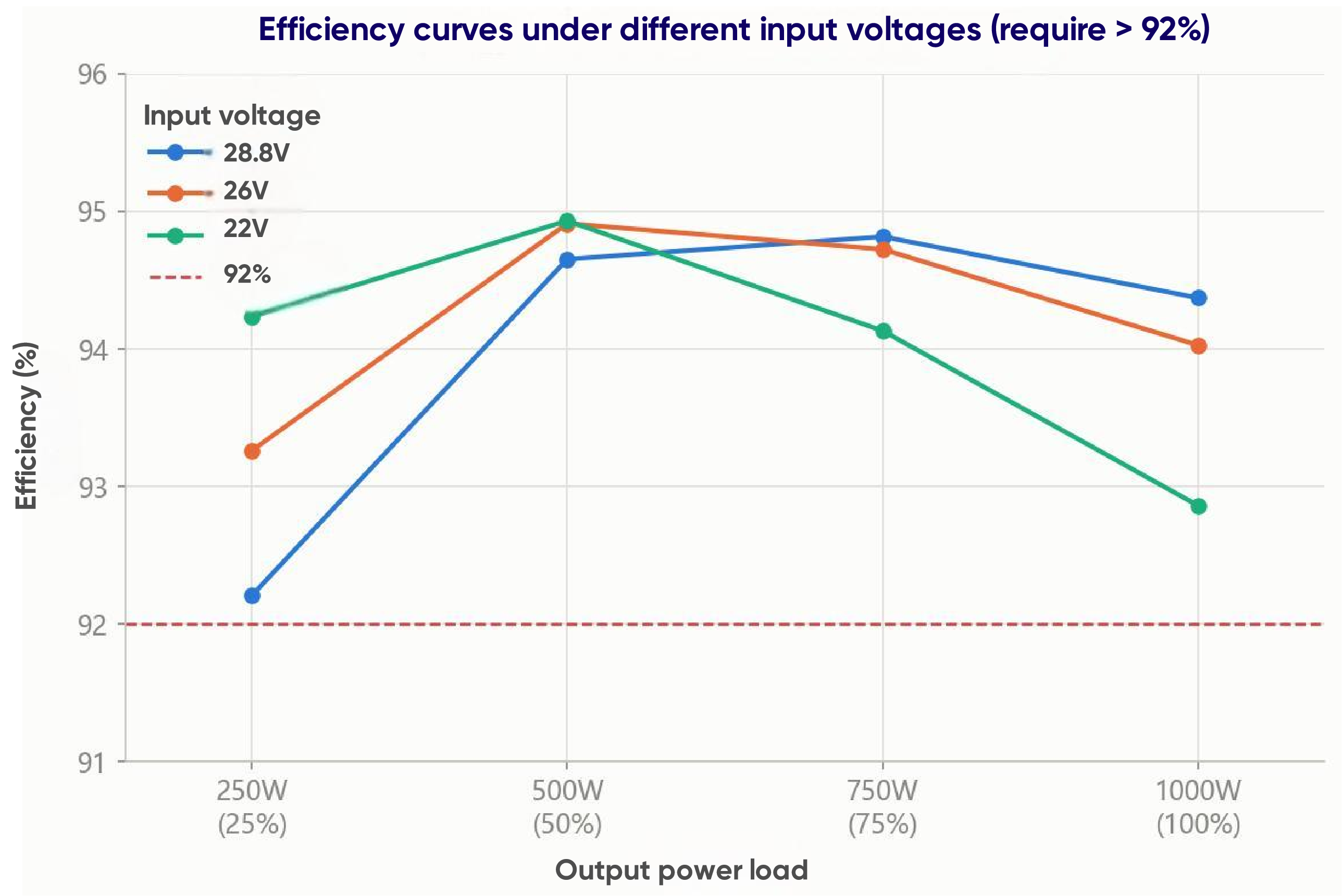
Output Conversion Efficiency ≥92% (rated conditions)
Output Frequency
50Hz/60Hz (automatically follows the AC charging frequency)
AC Charging Operating Voltage
Stable operation from 175V to 264V AC
Rated AC Charging Power
Mains Input Frequency for Charging
AC Charging Power Factor
AC Charging Conversion Efficiency ≥92% (rated conditions)
Core Advantages of the Solution
Fully digital bidirectional control: Combines inverter and charging functions in one solution. The output frequency automatically follows the 50Hz or 60Hz AC charging input frequency.
Independent dual-MCU control: Two G32R502 MCUs independently control the PFC and LLC stages. Analog signals can be sampled without isolation devices, simplifying peripheral sampling circuits and reducing BOM cost.
Efficient power topology: The totem-pole PFC + half-bridge LLC topology supports fixed-frequency LLC operation and soft switching across the full operating range.
High conversion efficiency: Peak discharge efficiency reaches 94.930%, with 94.02% efficiency at rated full load. Peak charging efficiency reaches 94.51%, with 93.90% efficiency under rated charging conditions.
High efficiency and low distortion: Power factor is ≥0.98, total harmonic distortion is ≤3%, and rated conversion efficiency is ≥90%. The pure sine wave output supports the safe and stable operation of sensitive equipment.
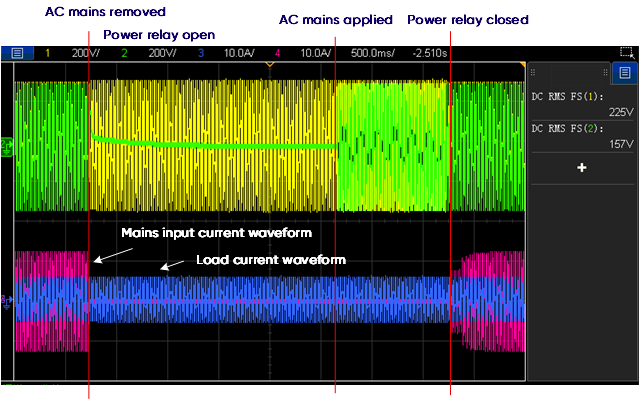
UPS functionality: The system automatically switches to inverter mode within 20ms of a mains outage, providing a smooth transition and uninterrupted power for critical loads.
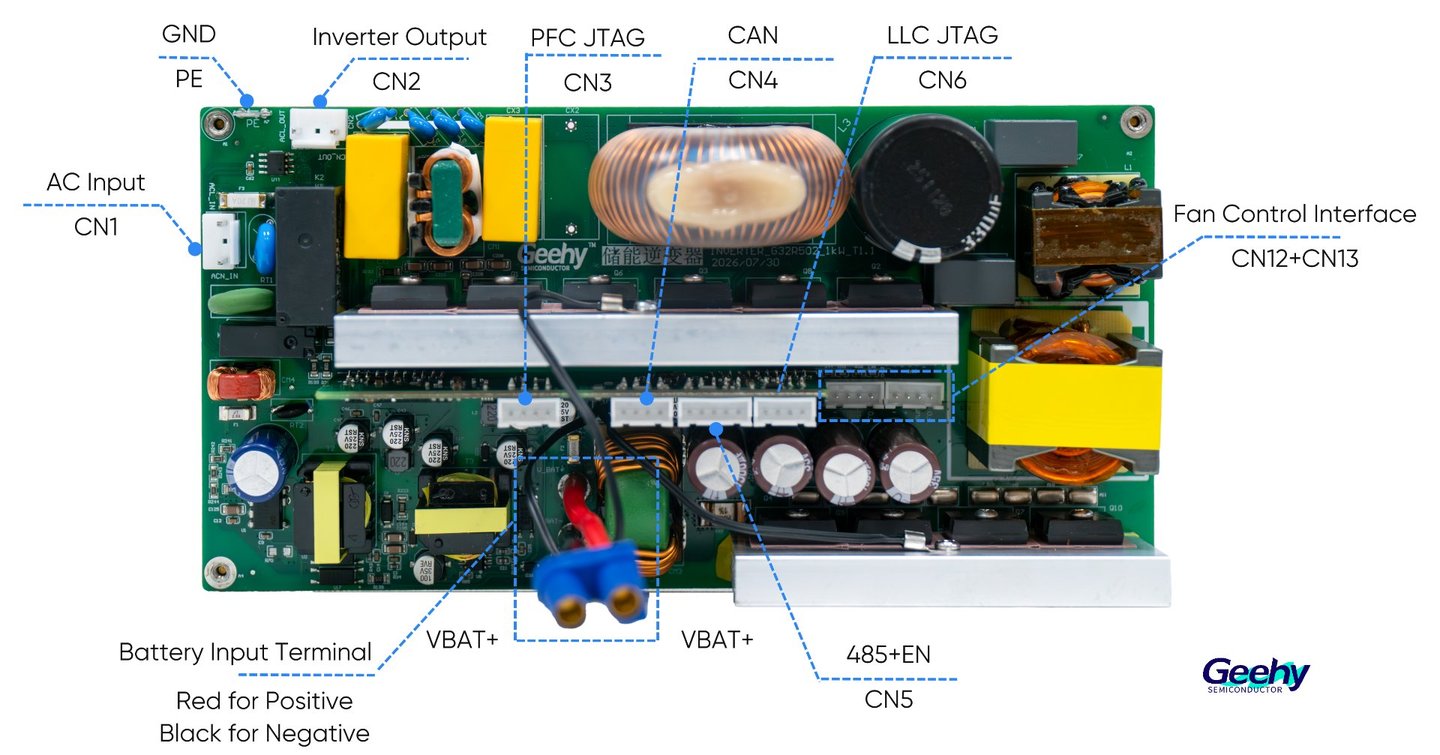
G32R502 1kW Energy Storage Inverter Solution Demo Board
Test Data and Operating Waveforms
Discharge efficiency curve: Peak discharge efficiency reaches 94.930%, with 94.02% efficiency at full load. Output voltage harmonics remain < 1% under resistive-load conditions.
Voltage harmonic curve: Peak charging efficiency reaches 94.567%, with 93.936% efficiency at rated full load and a charging power factor >0.99.
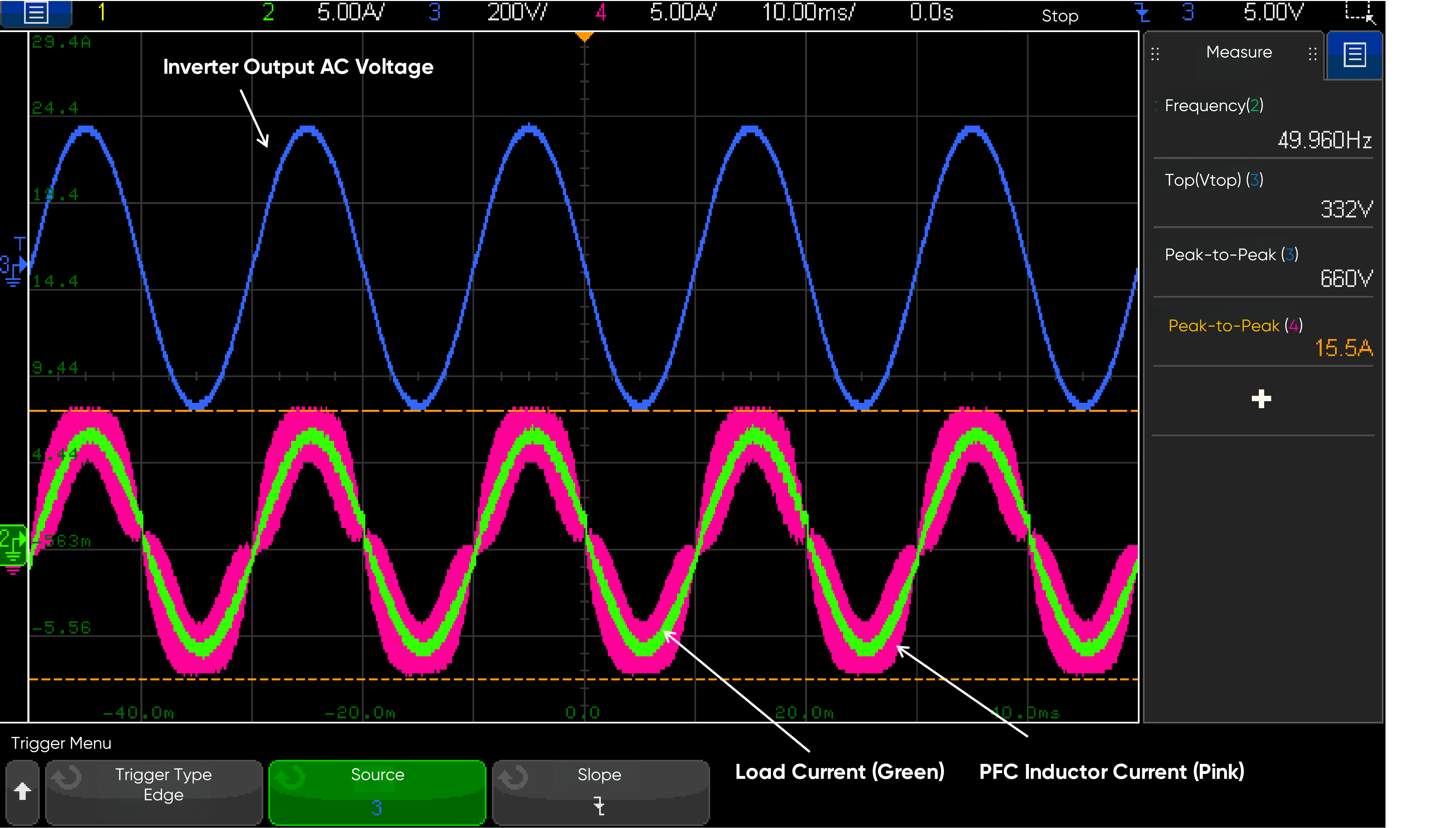
Inverter output waveform at a 1000W AC load
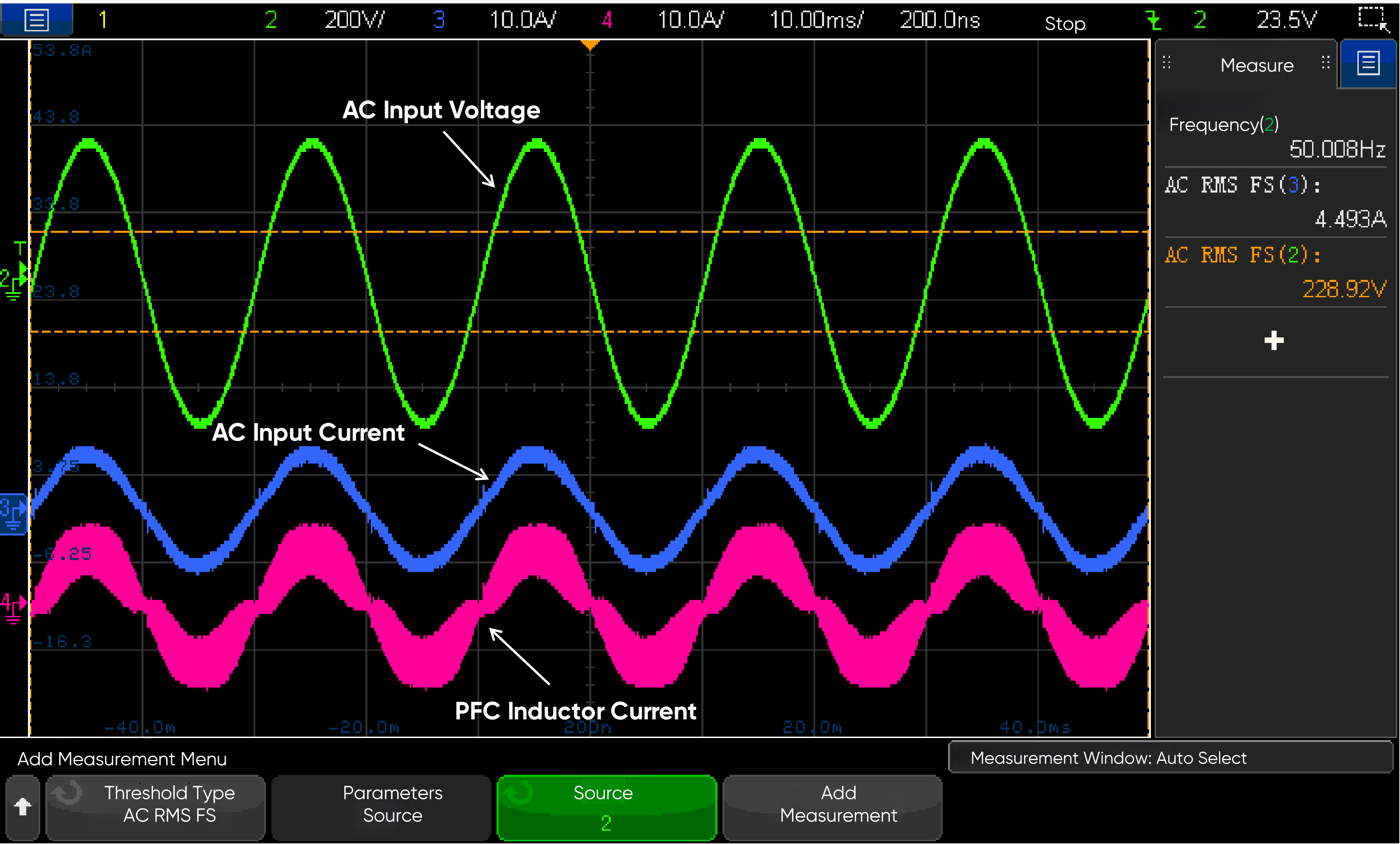
AC charging waveform at 1000W constant power
Overall UPS switching waveform
The Geehy G32R502 energy storage inverter solution includes a flexible, user-friendly PC tool. It supports real-time operating status monitoring, online parameter configuration, program variable reading, variable recording, and waveform plotting.
Features of the G32R502 Real-Time Control MCU
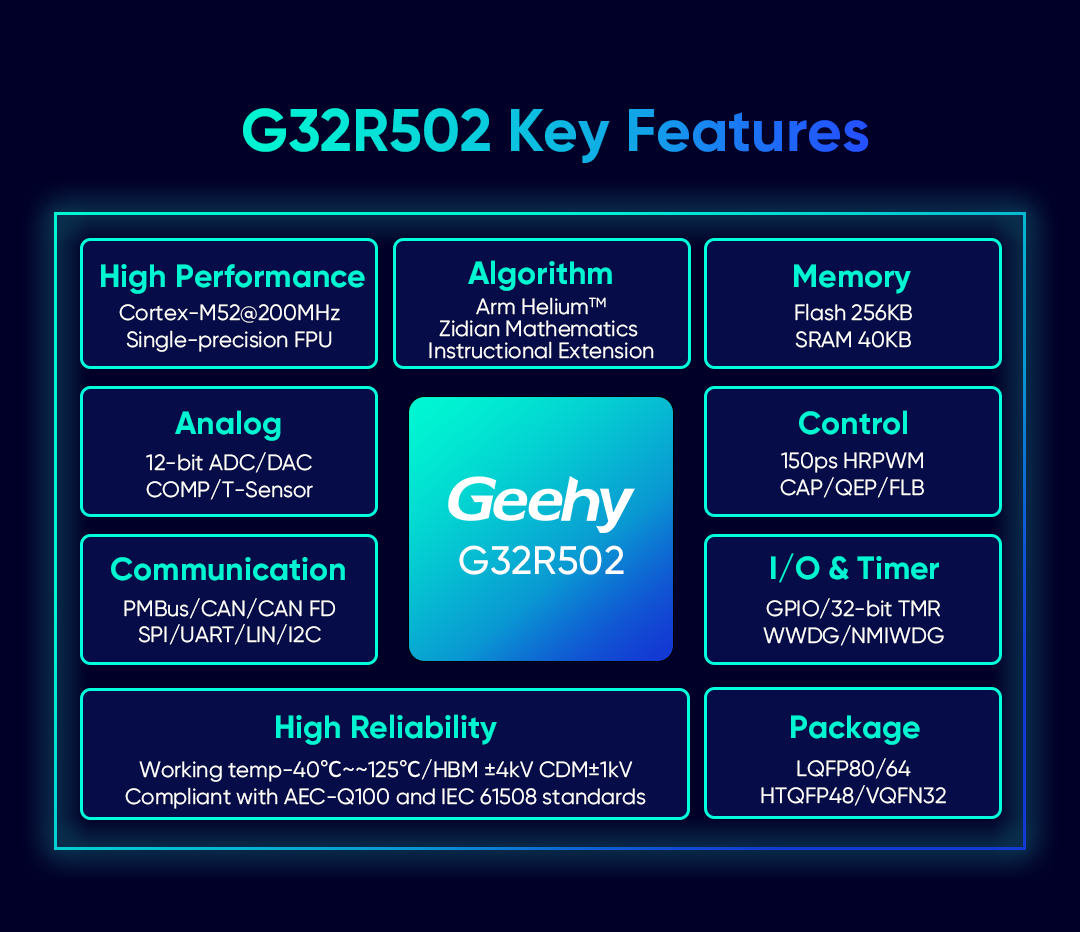
1. High-performance computing: The MCU integrates the Helium™ vector extension and Geehy’s proprietary Zidian mathematical instruction extension unit. The Cortex-M52 core’s ACI capability allows custom instructions to run directly within the core, accelerating power-control algorithms such as filters, compensators, and phase-locked loops.
2. Precise real-time control: Fourteen built-in high-resolution PWM channels with 150ps resolution enable precise control of duty cycle, switching frequency, phase shift, and dead time.
3. Responsive signal sensing: Four comparator groups, each with two built-in 12-bit DACs, support blanking and filtering for peak current control, zero-crossing detection, and trip protection. Two 12-bit ADCs with a sampling rate of 3.73 MSPS support synchronized, low-latency signal acquisition.
Conclusion
Supported by the G32R5 series of real-time control MCUs/DSPs, comprehensive software and hardware tools, and an experienced solution design team, Geehy can meet the digital power requirements of industrial control, smart energy, and other applications.
Geehy works closely with multiple end-product manufacturers and will continue expanding its product portfolio while improving product features and performance. These efforts will help the digital power industry achieve higher efficiency, greater power density, and lower costs while supporting the energy sector’s transition toward a greener and more sustainable future.
Scan the QR code below
for more product information and technical resources.